Measure Twice – Cut Once

So as we get close to the end, I am trying to make sure I have everything I need on-site or on-order. I have a newish whirlpool dryer that I was planning to use and need to order a new front loading washing machine to match. I noticed that there were two sizes (capacities) of this type of washer and went over to measure the space in the mudroom to see if I could get the biggest one. The existing dryer is 31.5 inches deep. The space in the room from the back of the wall to the very edge of the doorway (past the trim) is… 32.5 inches. You need minimum of 4 inches behind the dryer for the venting.

UUUUUUUUUUUUUGGGGGGGGGGGGGGGGGGHHHHHHHHHHHHHHHH.

So basically it doesn’t fit. If I install the dryer that I have (and have had since the architect supposedly measured it), I will not be able to open the mudroom door because it will stick out 3 inches past the door jamb. I looked back at the plans and realized that the architect did not leave room for the venting in the back of the dryer. He also must have used a smaller size for his default place holder because there is no way we have that much room.

I discussed with the contractor and possible solutions are:

  1. Order a new W/D set (there are a couple of cheap top load washers with normal-ish capacity that are about 28 inches deep) that should fit.
  2. Stack the washer and dryer further away from the door
  3. See if the HVAC guy can somehow make a space inside the wall to reduce the space need for the duct.
  4. Install a barn door instead of a swinging door and just let the dryer hand out there in the door way.

I am going to explore option 3. At least we have options I guess, but pretty annoying that these little measurement errors can cause big limitations down the road!!

Slow Floors

We started with a mix of 90 year old 2 inch top-nailed oak floors in the living room, cheap fir wood floors (probably subfloor?) in the downstairs bedroom, and 1990s quartersawn oak floors in the kitchen and family room. The goal was to tie it all together and match the newest floors. I love that hardwood floors last forever–like 100 years! Hardwood can be sanded and stained to give a new look as trends change. BUT, wow do they take a long time to put in compared to those fast laminate floors!

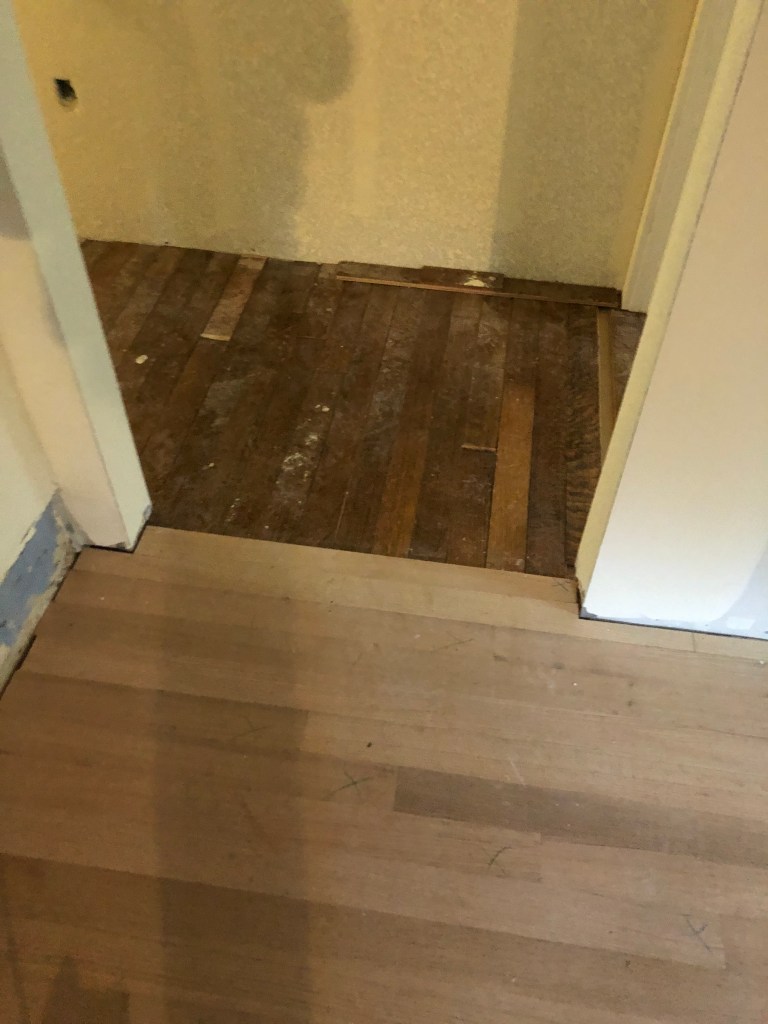
Of course nothing is simple. Once we demoed we found out that the newest floors were only 1/2 inch thick and now most quartersawn oak hardwood floors are 3/4 inch thick. This meant we had to install a little ramped transition from the 90s floors to the new rooms.

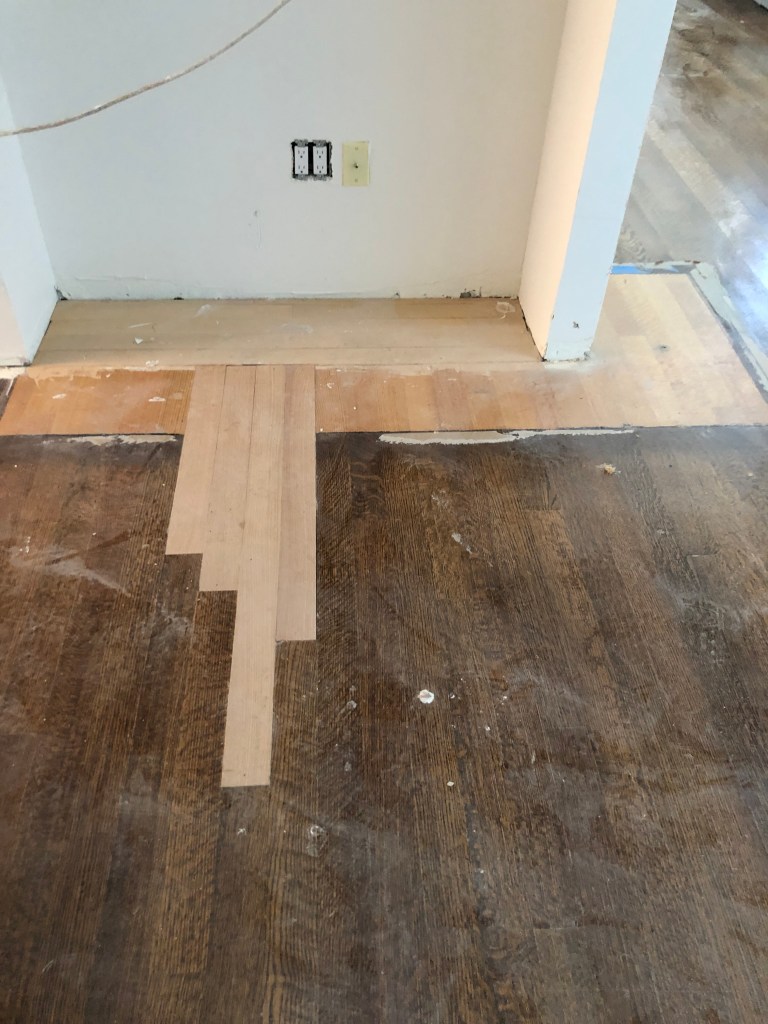
Not ideal, but not so bad. We also had a few wonky areas that were uncovered with demo. The laundry closet (that will no longer be a laundry closet) previously had linoleum, removing the built in bookshelf left a small rectangle of subfloor exposed, and a dead return air vent was now sitting in the middle of the walking path.

Our floor guys did a great job patching it up! We had just about enough old wood floor from demoing the mudroom to patch up the parts that needed the 1/2 inch floors. Then he was able to shave down a few new board as needed. It’s really pretty amazing what they can do with hardwood.

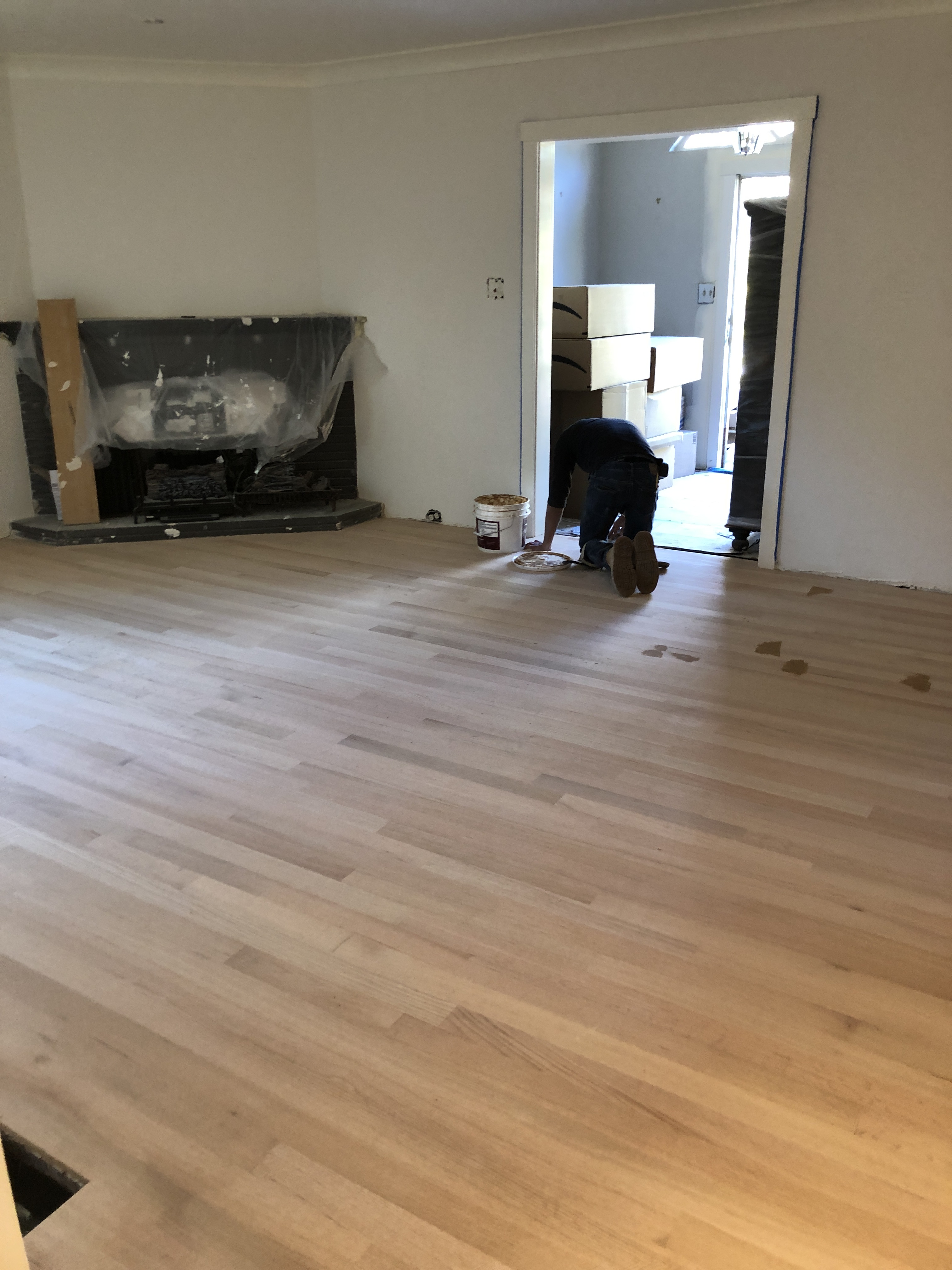
Laying the actual new wood floors in the living room and bedroom only took a couple days, patching took a couple of days. Then the floors have to “acclimate” for a few weeks before finishing them. After the acclimation period, they sand it all down.

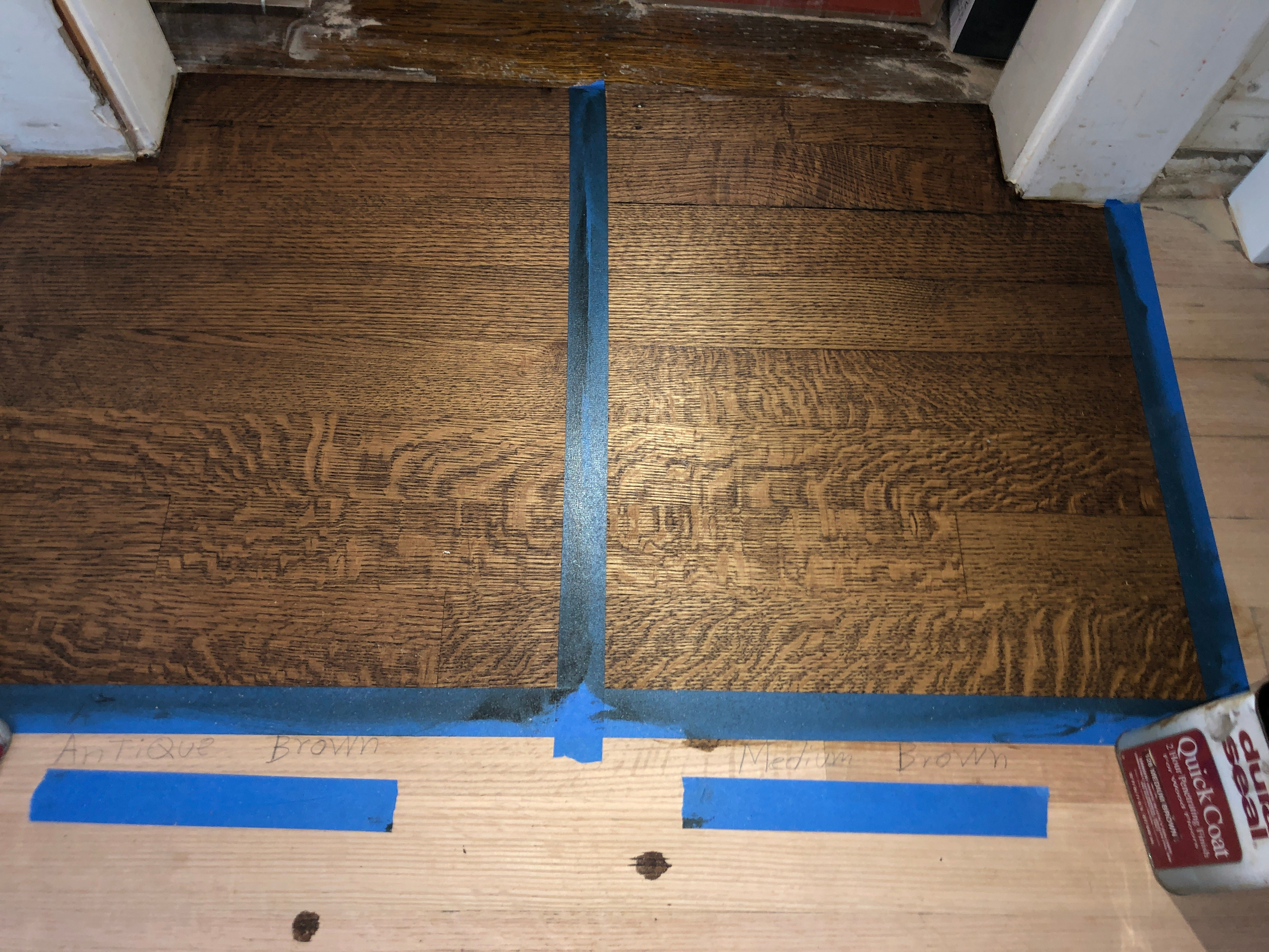
Then comes the stain. I liked the color we had before. I think it was “Antique Brown”. He did some test squares for me comparing Antique Brown with Medium Brown. For the life of me, I cannot tell the difference. He thought Medium Brown matched our old dining room floors best so we went with that!

Finally 3 (THREE!) coats of polyurethane to seal the deal.

Got Power?

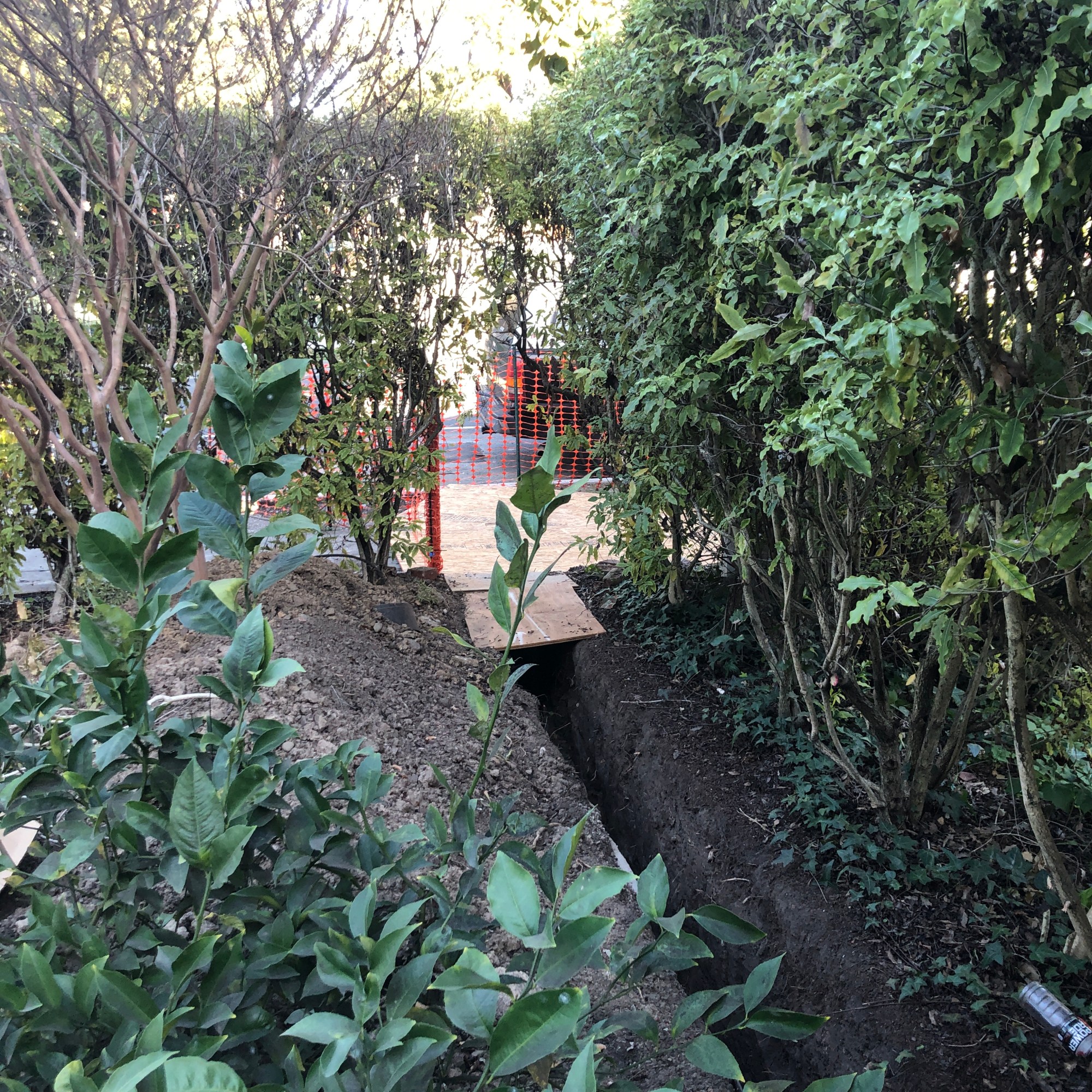
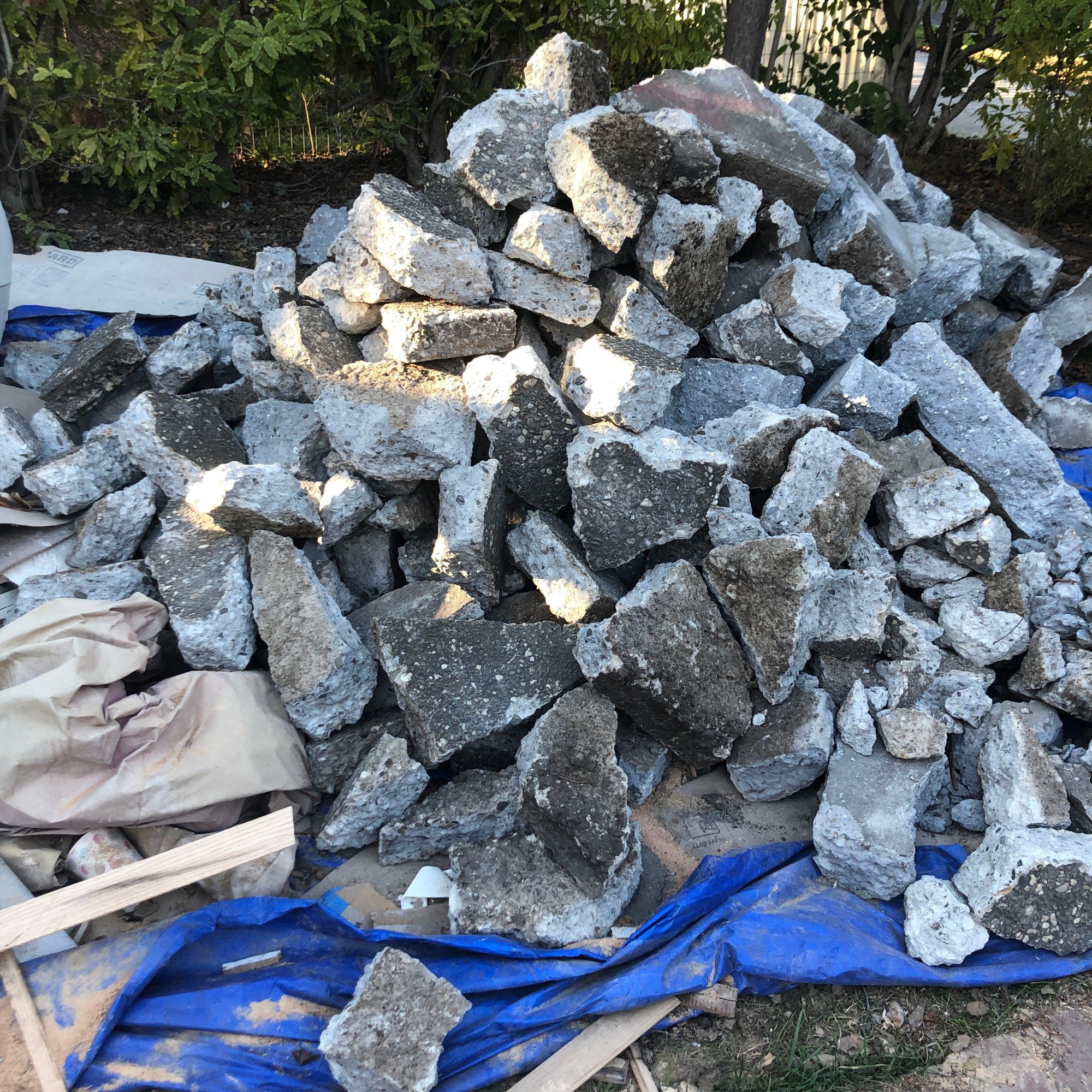
I mentioned utilities upgrades here. In order to install the electric service upgrade, we had to dig a giant trench through the yard AND tear up the sidewalk. The tear up the sidewalk we had to get a permit from public works. To get the permit you need the approved electric service application (which SHOULD have a sketched plan showing exactly where to cut the trench to reach the connection point–ours didn’t have this so we had to go back and request it after the fact) and a copy of your contractor’s liability insurance.

My what a mess.

Generally, as I understood it, the process should go like this and means you only lose 1 day of power:

  1. Dig the trench per the plan/specs.
  2. Schedule an inspection date with the electric inspector and the building inspector on the same day.
  3. Call for the existing power to be shut off the morning of that inspection date.
  4. After power is shut-off, lay the conduit pipe and install the new panel scaffold.
  5. Backfill the trench (*don’t forget to add a red caution tape that says “Electric” or something like that–this is a new requirements to increase safety for people digging in the yard)
  6. Proceed with the scheduled inspection with building and electric. (There is some test the electric inspector does…but hopefully they both approve and you are good.)
  7. Pull the electric line from the street sidewalk opening to the panel and connect to the panel.
  8. Call for electric to re-connect power.

NOTE: This reconnect is still considered “conditional”. I had to sign a paper that says I will not occupy the building until the conditional power is lifted (i.e. the permit is closed).

COMPLICATIONS…

Utilities have proven difficult because we are dealing with too many people (building/public works/utilities/electrician/contractor) that seem to interpret the rules or procedure differently!

First Problem: The electrical inspector came by to inspect the trench and said things looked great, ready to go. But we also need approval from the building inspector… come to find out… even though we had applied and were approved for the electrical upgrade (125 AMP to 200 AMP) somehow we forget to include that on the building plans (blame the architect?). So… I had to go to the building department and submit a revision. They let me fill out the “Simple load calculation sheet” to show that when all appliances and lights etc are installed the service is sufficient for our needs. Then we red-lined the plans over the counter to mark the existing electric panel with a service upgrade. This was a stressful last minute change (didn’t want to delay anything else in the last few weeks), but luckily the folks at the building department were helpful and understanding!

Second Problem: The contractor was planning to just lay the conduit pipe and then backfill the trench before inspection, but the building inspector told him he had to have all the fuses installed in the panel first. When the electric inspector came the next day to turn the power back on he said they weren’t supposed to do that yet–they have to take the line out, do some test, and re-pull it. Groan.

Third Problem: Scheduling delays. I gave up trying to figure out what my contractor was doing. By the time he had the proper inspections and finally got power turned back on… we were NINE days without power. Luckily my amazing neighbor let us use her electricity by means of extension cord so that guys could continue work on the house (sawing trim, paint sprayers, nail guns…).

Got Gas?

We have to upgrade our utilities (electric and gas) for this project. The process started during the building plan review process when we had to fill out this form. The form then had to be stamped approved by both gas and electric utilities people at the city. So we ended up with TWO copies of the form, one stamped by gas and one by electric. After approval they send you a bill and you have around 90 days to pay the bill to initiate the actual service upgrade.

The funny thing is, to upgrade gas it costs over $8000, but all you have to do is get your gas meter pipe stub in the right place for the meter hook-up on the side of the house — the city does the rest. Electric service only costs about $850, but the home owner (or contractor) has to dig a 36 inch deep trench and lay the pipe all the way through the yard AND sidewalk to the service location on the planting strip next to the street!!

We had to move the gas meter location about 15 feet because the new basement egress window cut into the old line location. We were told by the gas utilities folks that you have to get on the schedule early because there is an 8-12 week wait list for service install. I harped on my contractor every couple weeks throughout the fall to get this worked out. Of course he didn’t. Come late December, I check in with the Gas guy from the city. He says, no, we are not on the waitlist and that we still have some work to do before he can put us on the list.

Now I started freaking out. The contractor didn’t have the gas meter stub out out in the right location! It was a last minute change on the plans and I think the plumber didn’t get the message or something. Whatever. Quick fix was, throw the pipe on the side of the house to the new location. So this is what we have.

SUPER ugly. Seems silly that we just did a whole remodel and they weren’t able to hide the gas pipe in the crawl space, but at this point we are just trying to stay on schedule so I guess we paint it house color and plant something in front of it!

Eventually after the building inspector approved the gas stub out (they perform some kind of pressure test) the city came out and stuck the gas line in the trench next to the electric pipe. Then we could backfill everything and close up the sidewalk. This was just the gas LINE though. There is still another step to get gas FLOWING through the line and into the building and apparently we are still on the wait list for that…

Rewind…

The orangepeel wall texture was stressing me out. As I talked to people about the textured walls everyone kept encouraging me to fix it now. There would never be another time like this when we have no carpet, no light fixtures, no furniture… (we did have to finish the hardwood floors in the middle so that was kind of a bummer timing-wise, but totally worth it). So I finally begged the contractor to help me fix the problem. The only solution to orangepeel that thick–is skim coating (Level 5 finish). They basically roll on a thick layer of drywall joint compound across all the walls and then smooth it out with a trowel, let dry and repeat. I felt ridiculous back-pedaling like this, we had already PRIMED AND PAINTED all the walls! I think my painter was going to cry.

Contractor was able to negotiate a deal with the drywall guys and they came by to “erase” the texture.

They made a big mess. That’s just how it goes.

The old plaster walls in the living room were not cooperating very well with the first coat though. They started bubbling and were VERY slow to dry compared to the rest of the house. This delayed us a few days because we couldn’t start the second coat until the first coat dried.

Fast Floors

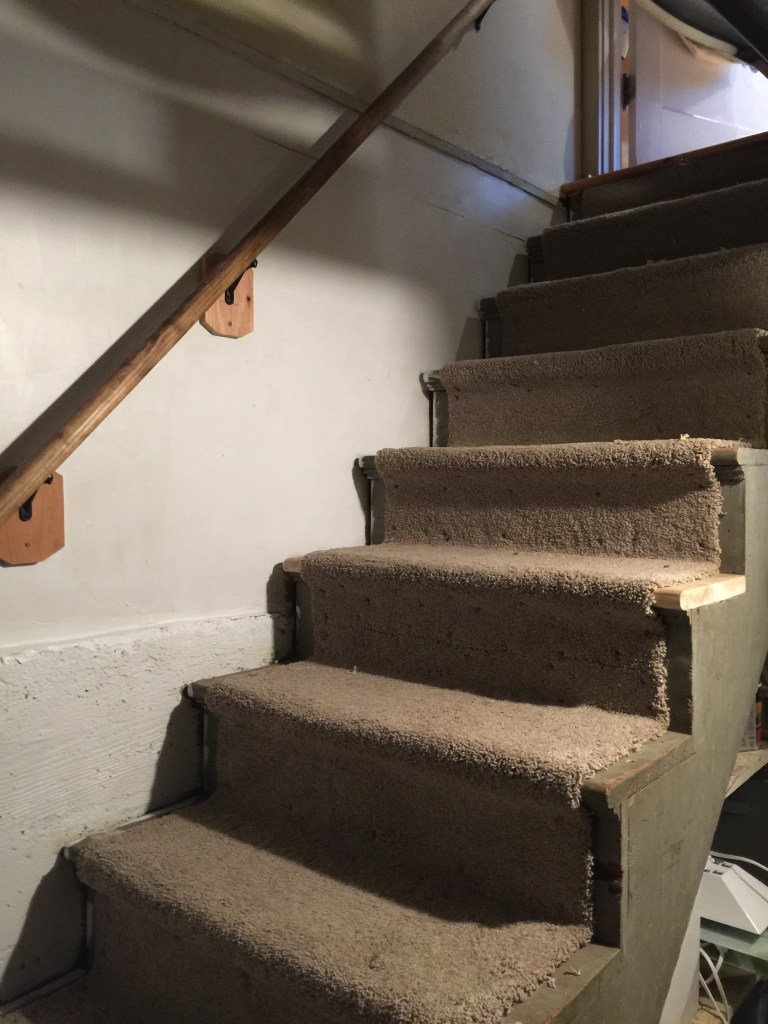
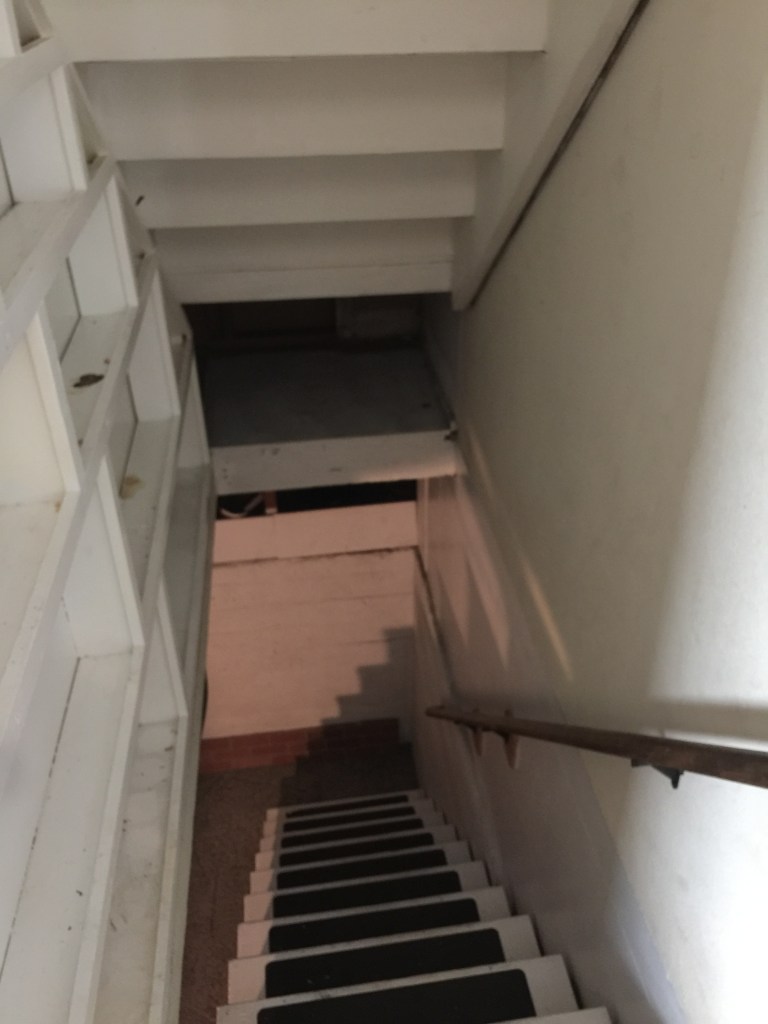
Our basement had 100 year old stairs that had seen better days. When we originally moved in they were covered with left over carpet from upstairs.

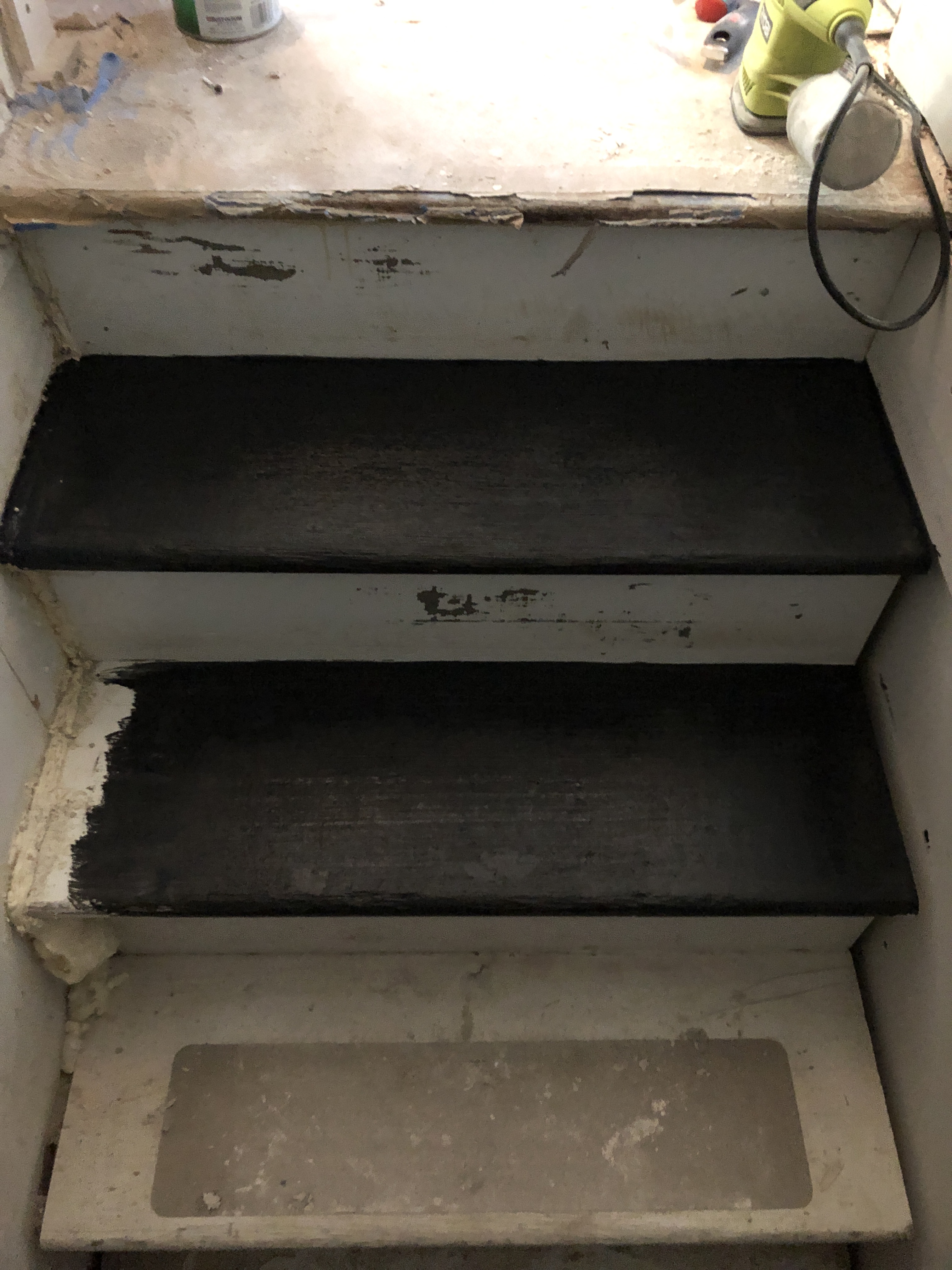
I pulled the carpet off, painted them white and put those little black sticky treads on them. We weren’t sure WHAT to do with these stairs for the remodel. The Contractor kept avoiding the topic and acting like there wasn’t a good solution.

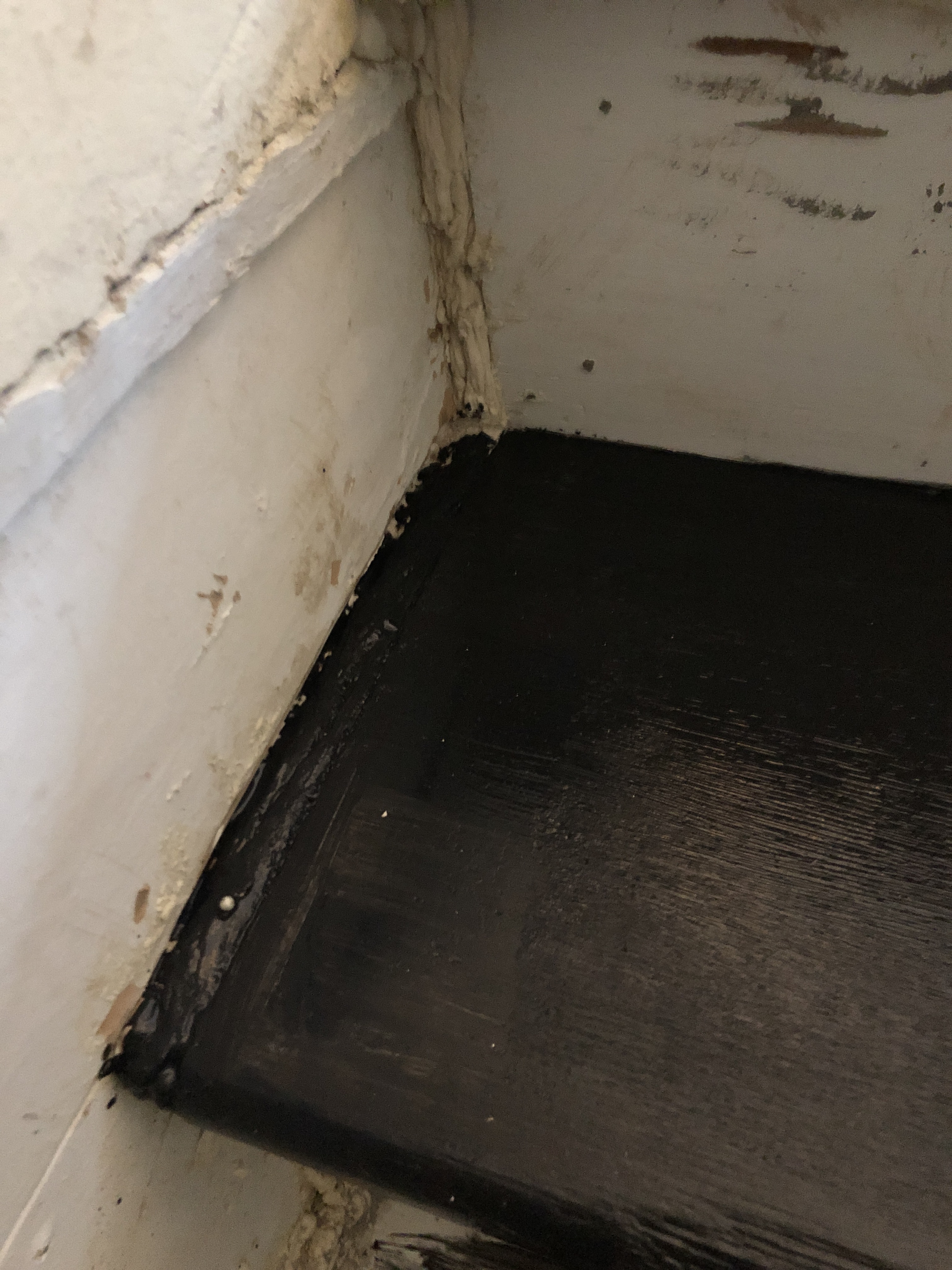
I spent some time googling and had a plan to fill in the gaps on the sides with spray foam and paint them all black. It didn’t really come out so great. My husband was not a fan.

We stopped by a flooring store to see if they had any thin material we could use to cover the steps (you have to be careful not to add too much height or it makes everything wonky). They showed us some thin waterproof laminate flooring that had matching bull-nose stair pieces and said their guys could install it no problem. So we scheduled it and boom. In one (LONG) day these guys came in and laid this quick flooring in the basement and all the stairs.

It obviously doesn’t match the wood floors, but definitely looks better than it was and should be a good, sturdy waterproof material for the basement.

A Pile of Tile

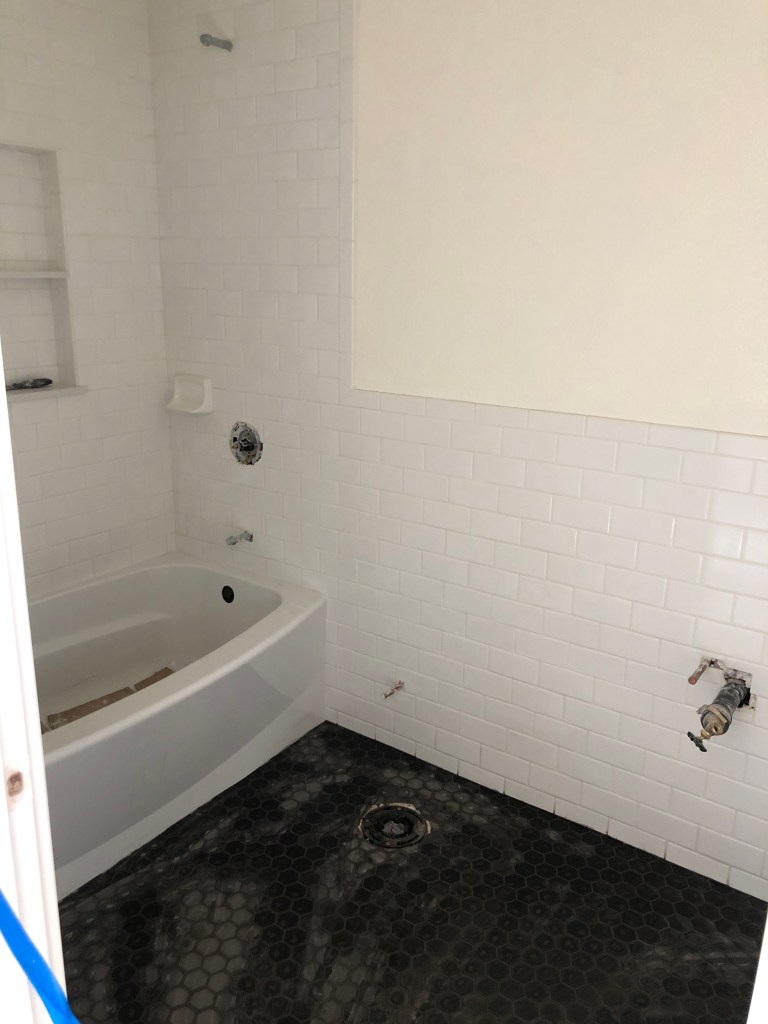
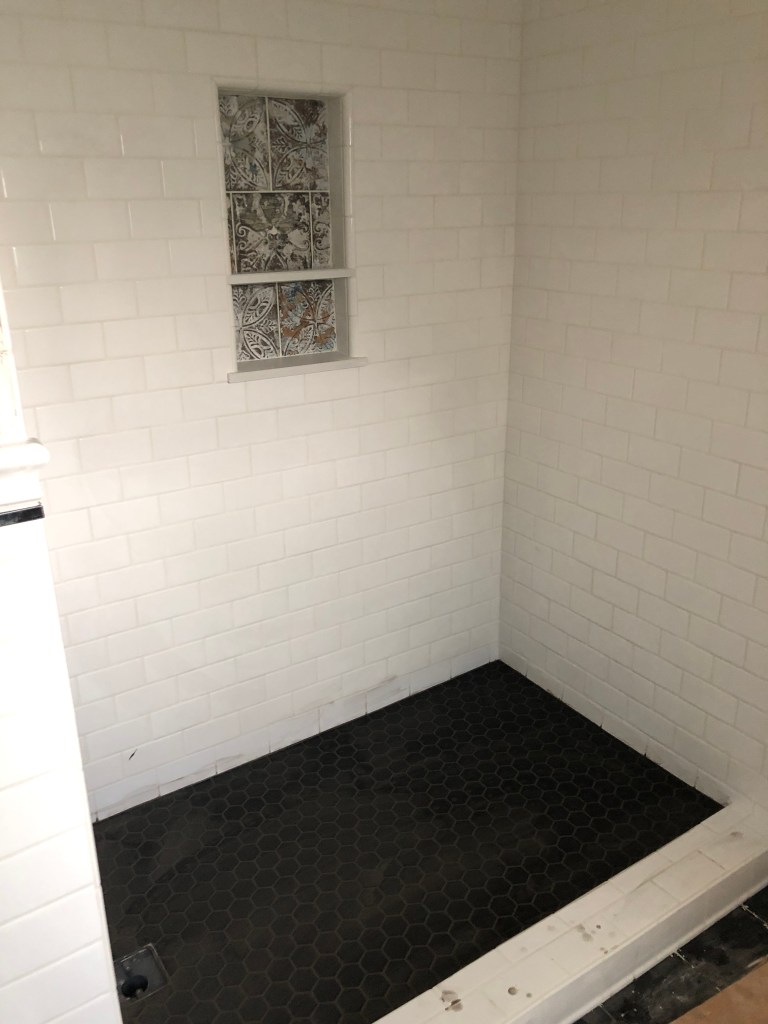
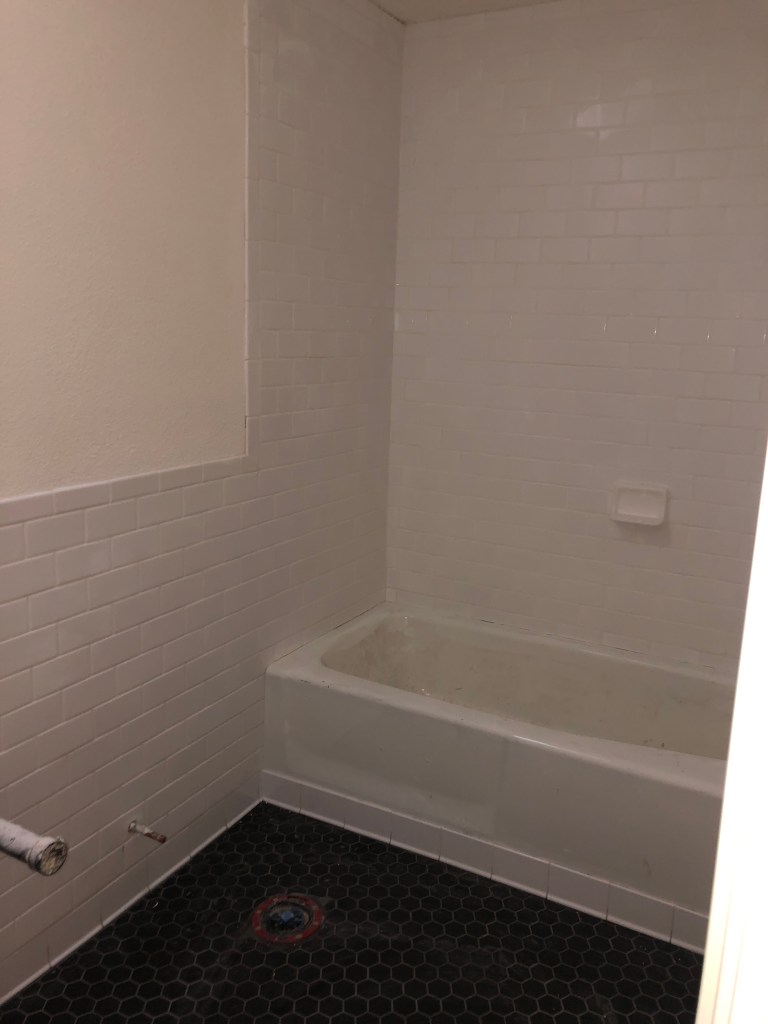
While the several weeks of steps for drywall was going on, they started working on tile in the bathrooms. I had a lot of simple, white, 3×6 subway tile in my plan. The house was originally built in 1926, so I was trying to stick with that era generally in my designs. I think I bought about the cheapest subway tile available, but it is clean and simple. I jumped on the hex bandwagon for the floor tile and used a large black hex for the master and small black hex for the other two bathrooms. It took 2 guys about week to tile the floor, full shower walls, and about halfway up in sink areas in each bathroom.

Yea, it’s sort of boring, but I have seen my share of dated tile bathrooms so hoping this is neutral enough that I won’t be sick of it in 5 years!

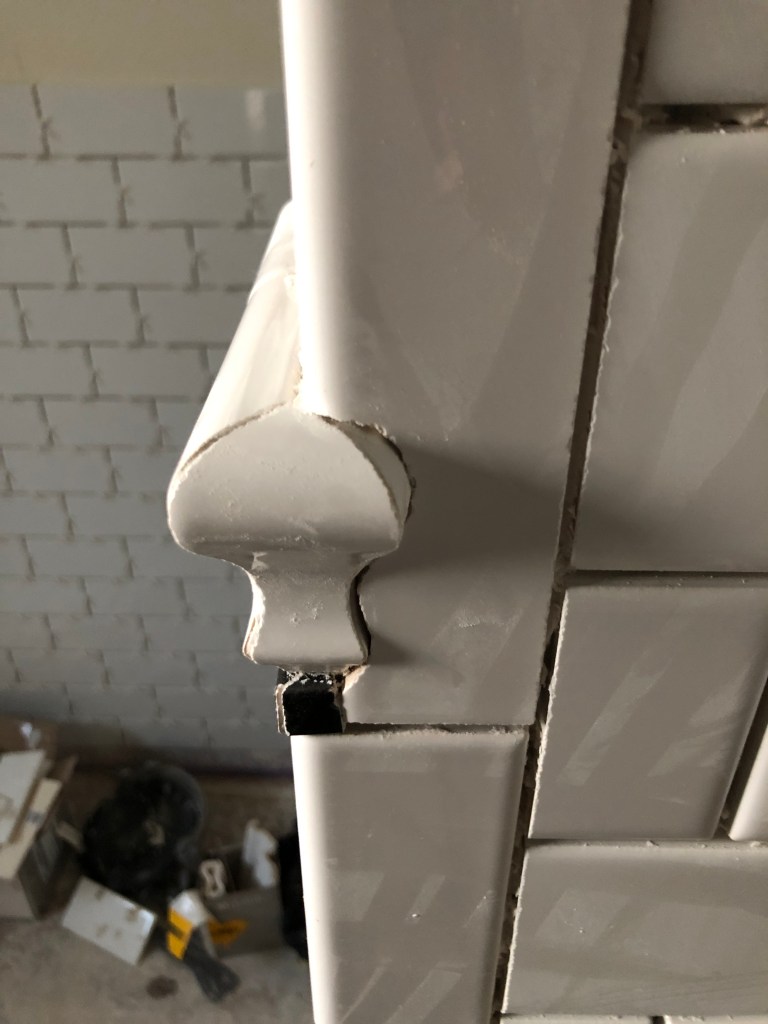
Our tile guy knew what he was doing, but I don’t think he was a super pro or anything. I was really impressed with a couple finished trim edges he pulled together though. Corners can be tricky!

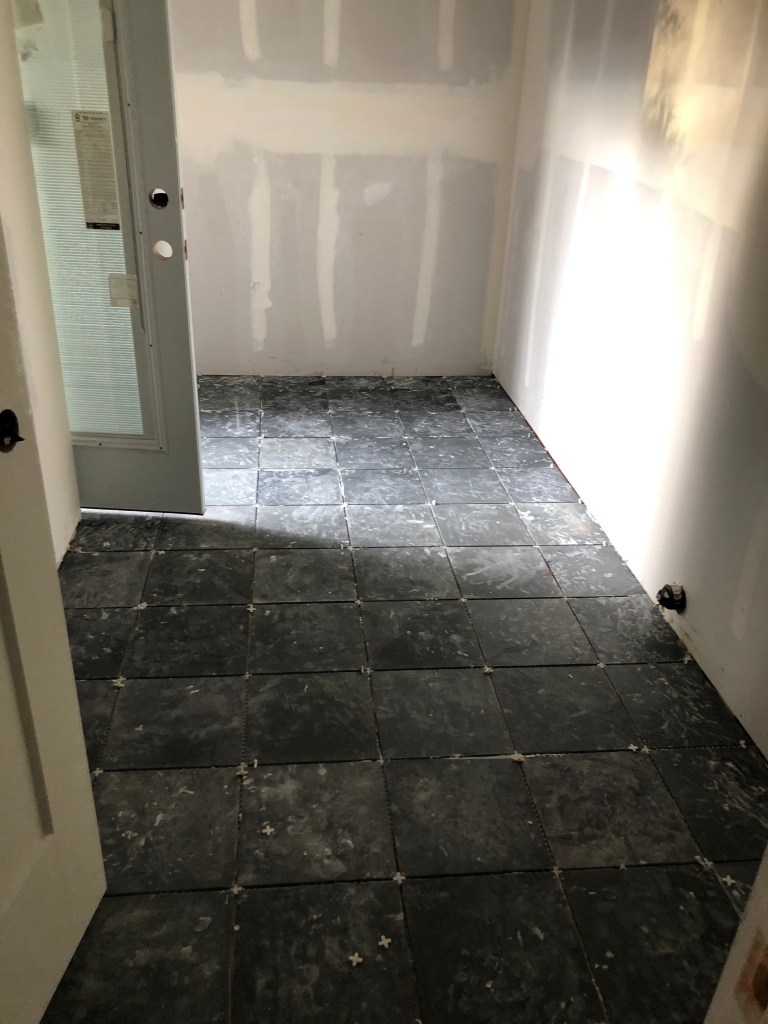
They also tiled the floor in the mudroom with a cheap black slate tile that is pretty close to the tile that we have in the front entrance.

The grout though…

I’ve heard a lot about this new acrylic grout that is suppose to completely repel water and mildew that is very appealing to me with all this tile! The general contractor hasn’t worked with it though and is skeptical. I’ve had traditional cement grout in a shower before and it was terrible to clean so really hoping to give this stuff a shot.

I bought some of the pre-mixed acrylic grout and talked to the guy actually doing the tiling. He was okay with trying it, but I am not really sure he understood the directions. The pre-mixed acrylic grout dries faster than traditional and supposedly is hard to wipe off the tile face after it dries (unlike traditional sanded cement grout). It did seem a little harder for him to apply, but I didn’t really notice any issues with residue on the tile face. I was doing white grout on white tile though so maybe it was just less obvious.

Ultimately we went with a hybrid product, sanded grout with added polymers (Mapei Keracolor sanded grout). We ALSO used the Mapei Grout Maximizer instead of water when preparing the grout. This got expensive, but hopefully time saved on tile cleaning down the line will be worth it!!